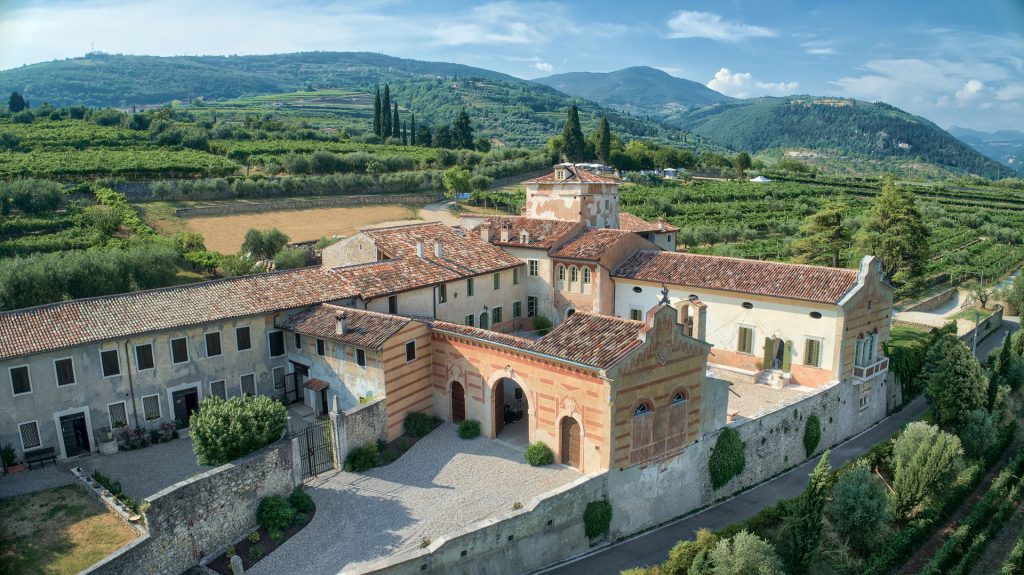
THE VILLA
The Wonderfully Frescoed Manor Villa:
a Renaissance Jewel Surrounded by Greenery

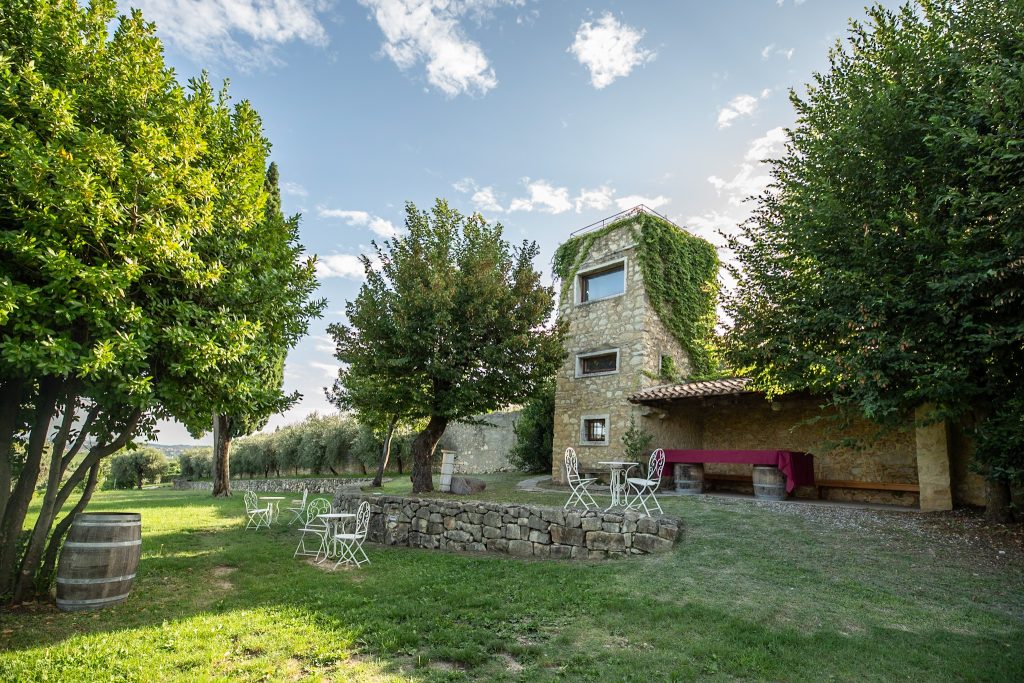
Inhabited since ancient times, the villa was initially a castrum used by the inhabitants of the area as a refuge in case of danger and later, in the Scaliger era, it was part of the system of tower houses that surrounded the city of Verona for the defense of the territory.


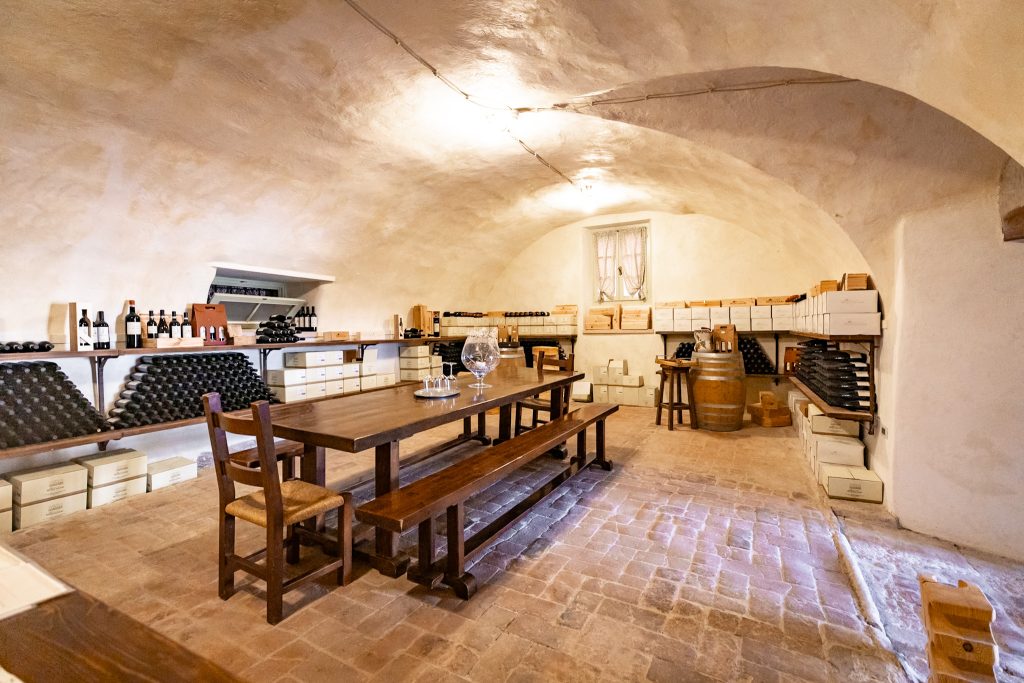
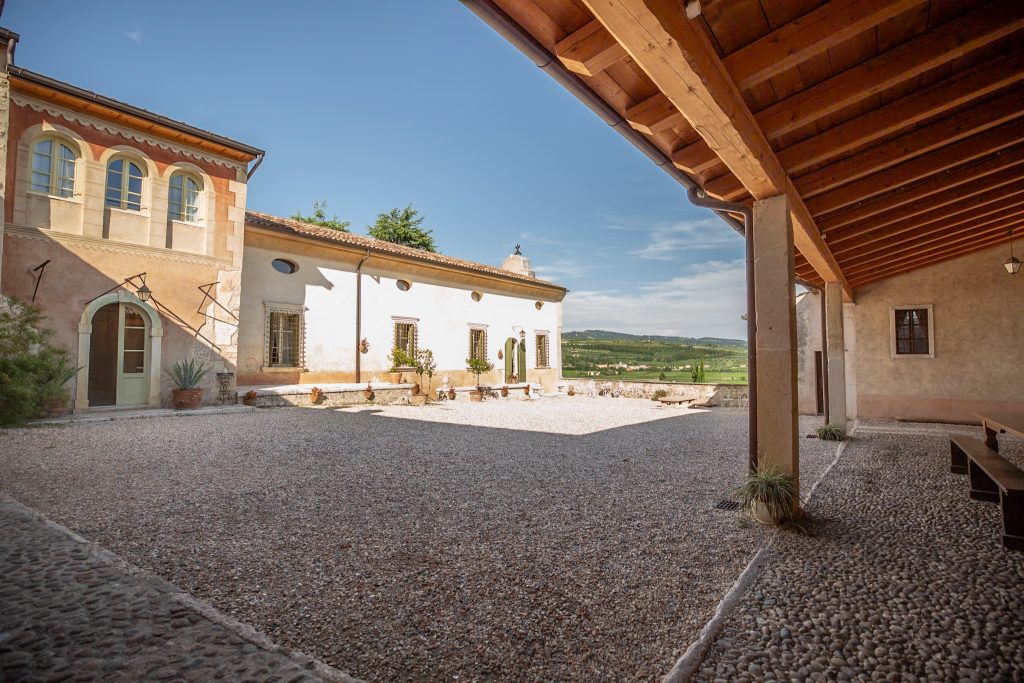
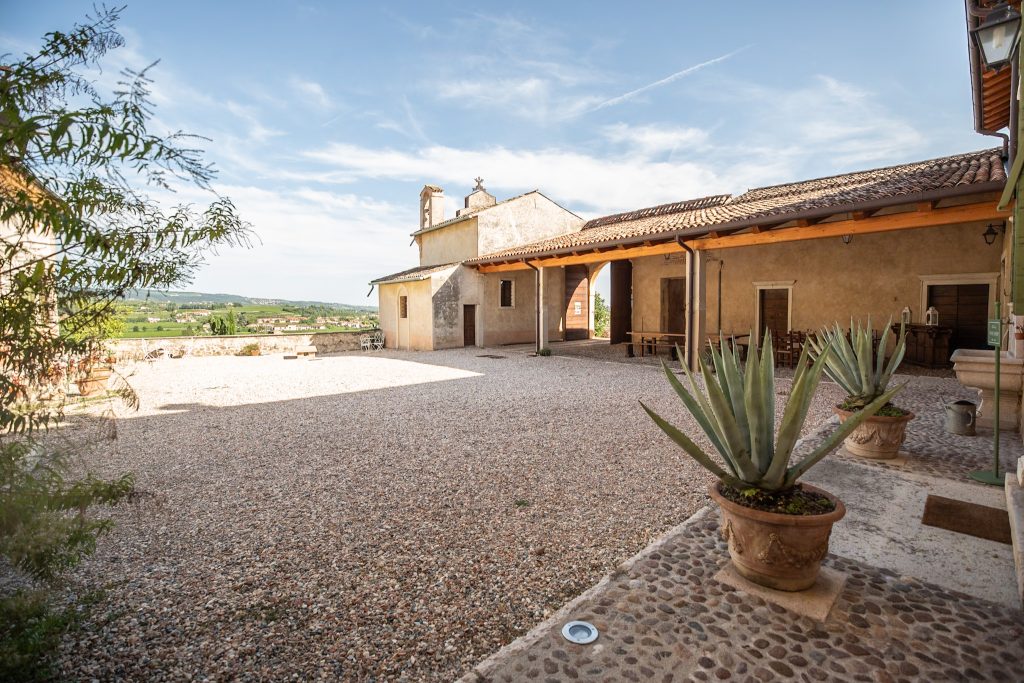
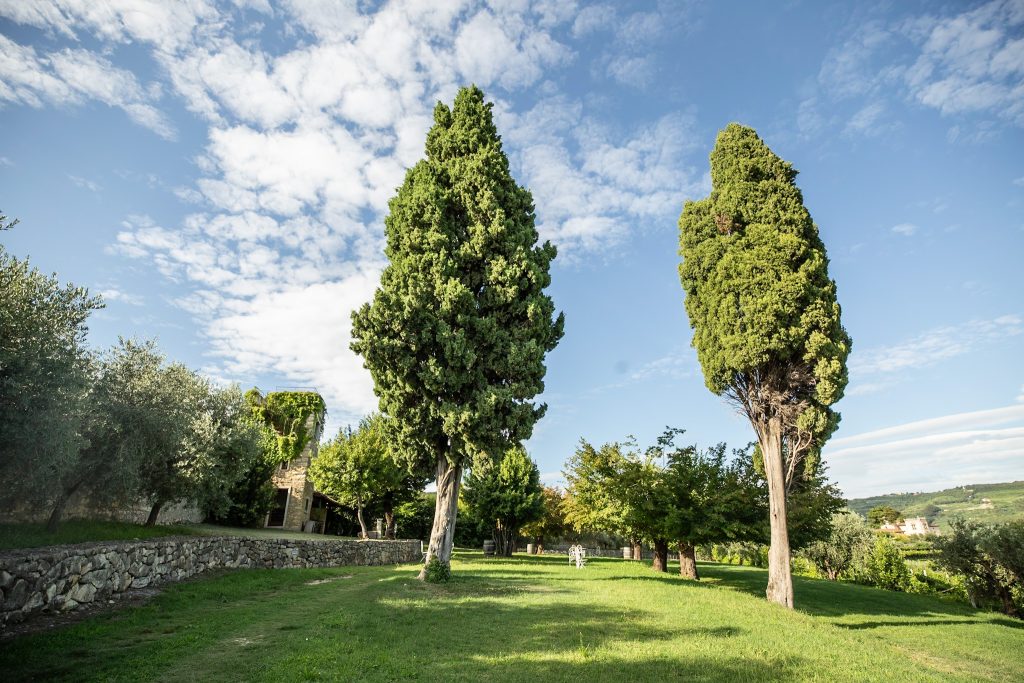


The evolution of the villa from the 15th to the 17th century
History lives in the architecture: a complex unchanged from the nineteenth century onwards.
Since the beginning of the 19th century, the structure has remained almost unchanged, preserving its ancient charm divided between the style of a fortified tower house and that of a country villa with its sinuous 18th century lines.
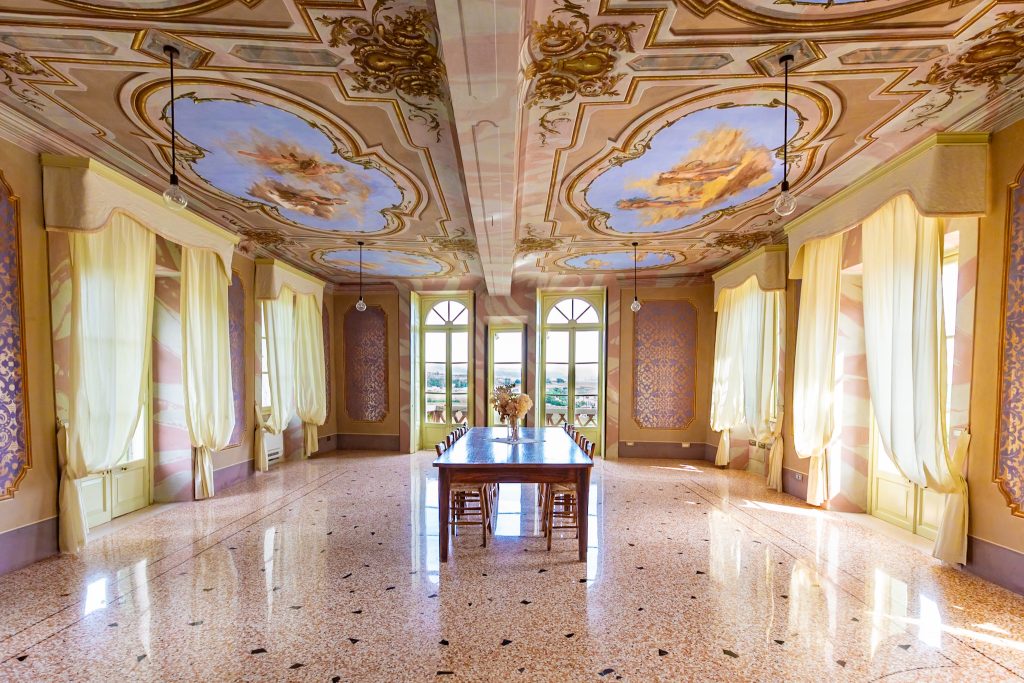
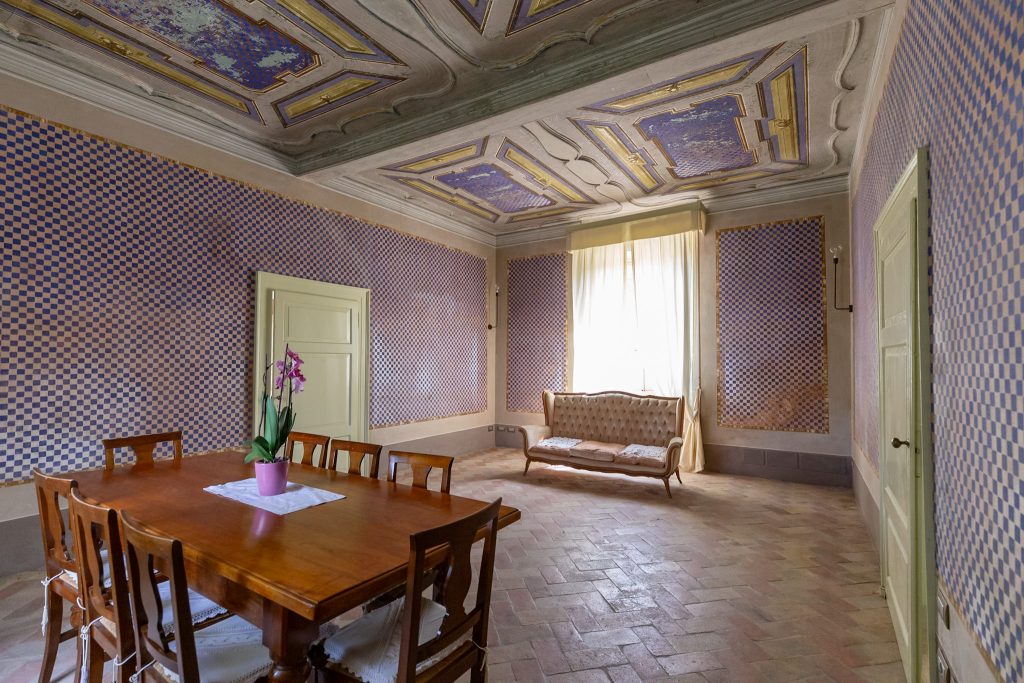
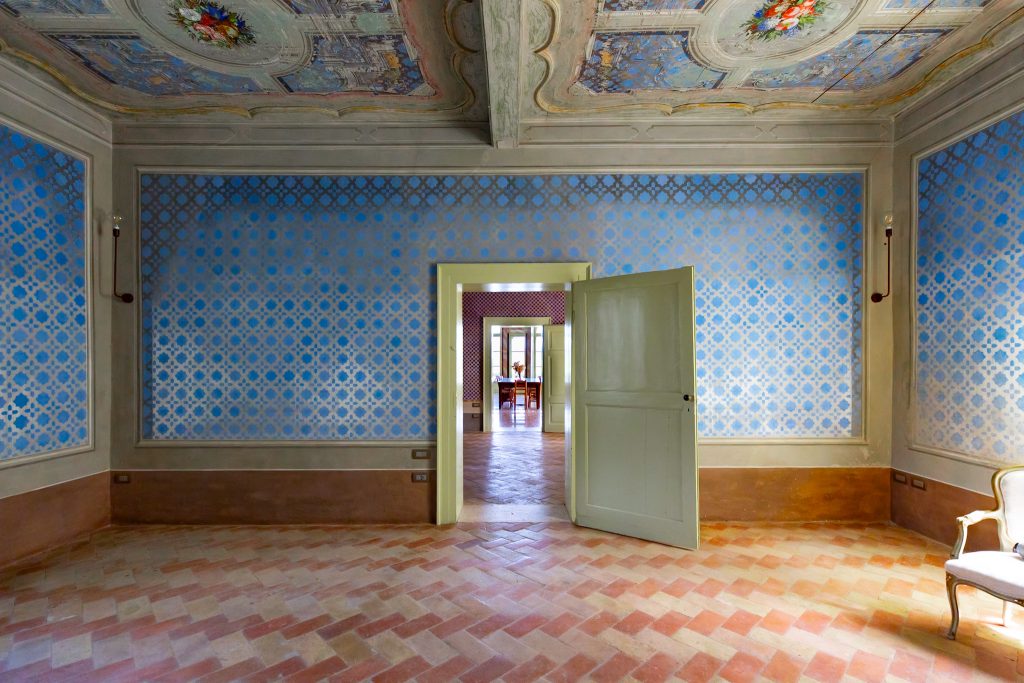
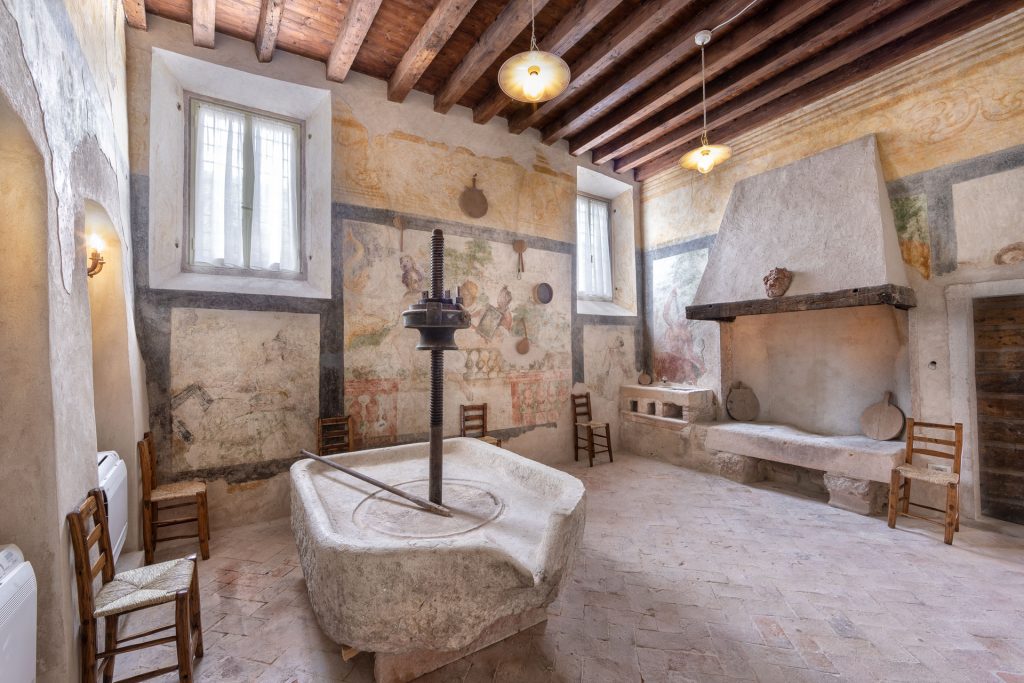
There are numerous frescoes dating back to various historical periods. In the oldest part they are more linked to the matrix of warrior life, while in the more recent ones they are gradually connected to the playful and rustic themes of country life.

Oriented towards the East to welcome guests arriving from the city.
The villa originally faced east, and the road from Verona came from there. From the beginning, the villa was designed to welcome guests, opening its privileges to those arriving from the city. In addition to the portico and the two courtyards, front and back, the tower house includes a small church dedicated to Santa Maria Maddalena de’ Pazzi, a Florentine saint of the famous lineage, as confirmed by the seventeenth-century altarpiece inside the church itself. The small parish church, built after the Council of Trent to keep the Catholic community united, is still functioning today for the blessing of houses and fields and for the recitation of the Holy Rosary.
A vast symbolism with a deep Renaissance feel. The room of Orlando Furioso.
The various rooms are all completely frescoed. During the restoration and recovery phase under the plaster layers of the figures, it was decided to focus on two situations: the sixteenth century and the eighteenth century. Thus, crossing the various rooms, you will admire the sixteenth-century room of Orlando Furioso with the scenes taken from the woodcuts of the Venetian edition of Giolitto of 1542, where the stories from the various cantos of Ariosto’s chivalric poem are narrated. Prepare to meet Orlando who goes mad, the beautiful Angelica, Polinesso, the lady Dalinda, the princess Ginevra and her beloved Rinaldo.


The great universal themes of the Classical world: the Mythology of Olympus and the Metamorphoses.
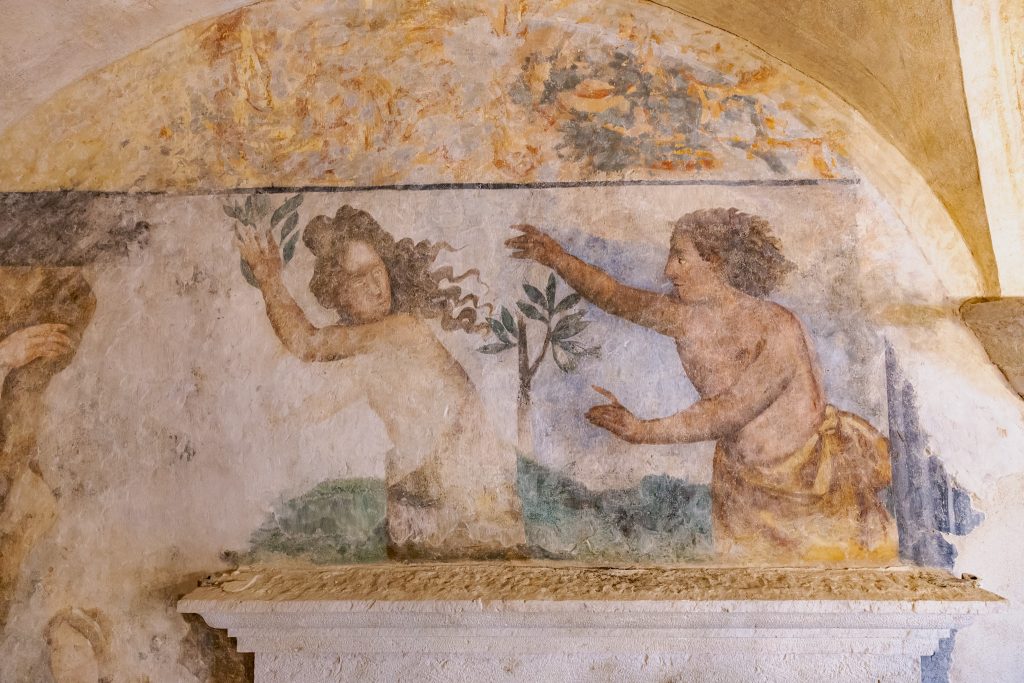
Continue your journey, marveling at the rooms that narrate, fresco after fresco, the stories of the Gods taken from Ovid’s Metamorphoses: in front of you there is Apollo and Daphne, and then next to it a large banquet where ambrosia is drunk, and again the story of Io, the three graces with Mercury, Adonis and Venus by Titian. There are also frescoes and ideas still outlined on the wall, in drawings and sketches by the artists called sinopias.
The Old Testament in Pictures: The Stories of the Bible Before the Coming of Christ.
Finally, in a manor house of noble and cultured lords, subjects taken from the sacred scriptures cannot be missing.
You will be able to admire moments from the life of King David, the beautiful Bathsheba and the tragic story of Judith and Holofernes, as a testimony to the spiritual life of the learned family.

Palazzo Montanari today: hospitality and wine products.
Today Palazzo Montanari continues its ancient vocation and produces the fine wines and extra virgin olive oil of Valpolicella.
An important part of the villa is the “brolo”: a natural amphitheater with rows of vines placed on the classic dry “marogne”, with a particularly sunny south-east exposure that benefits from the beneficial influence of the air that rises in the morning and descends in the evening from the Fumane valley. The dry, calcareous and skeleton-rich soil guarantees the very high quality of the grapes, an essential starting point for high-class wines.